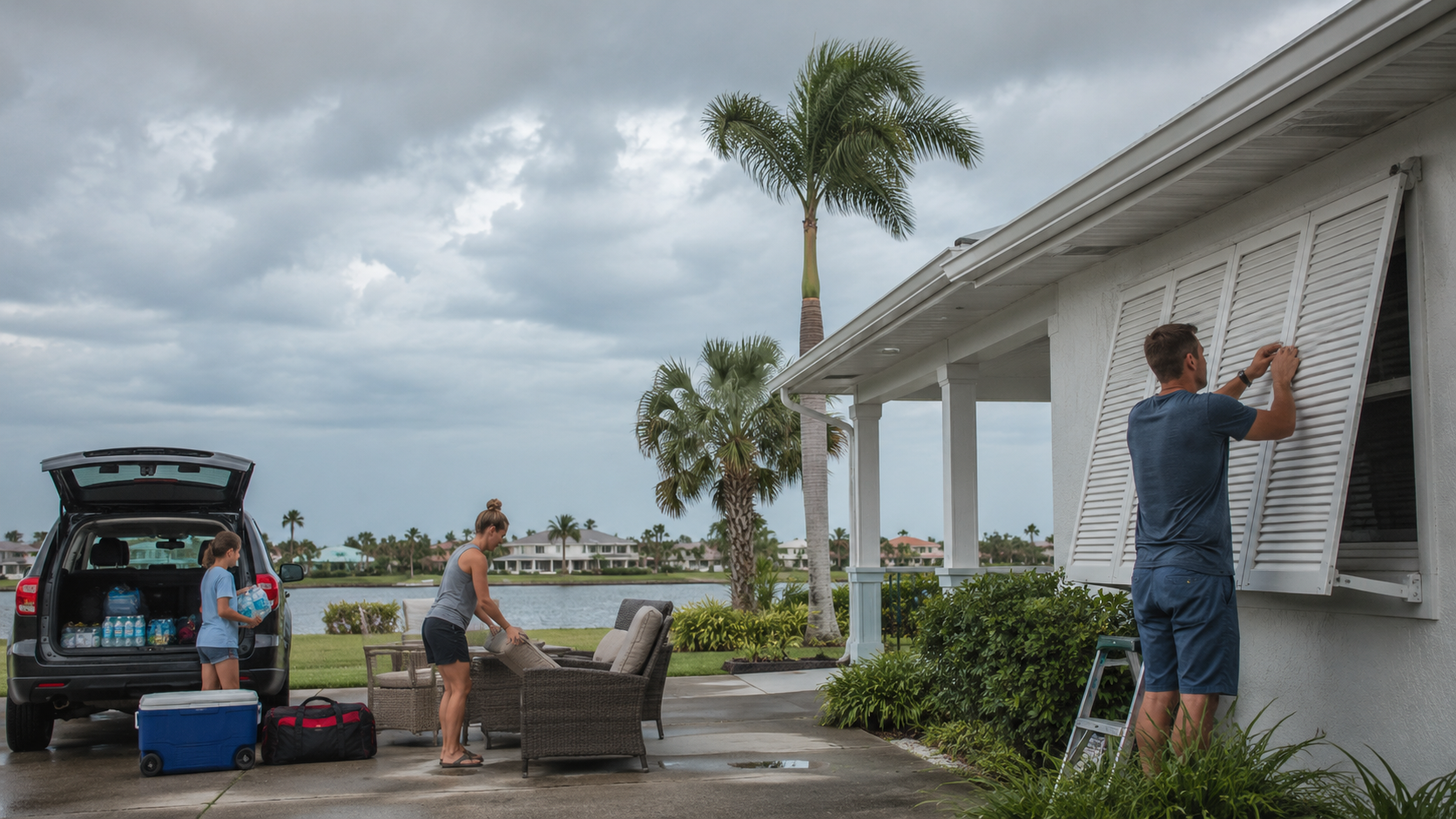
Hurricane season in Florida is not something to take lightly. Every year, families across the state face the same question: Are we actually prepared, or are we just hoping the storm misses us?
The Atlantic hurricane season officially runs from June 1 through November 30, but the time to prepare is before a storm is on the map. Once a storm is named, supplies disappear, contractors get backed up, and insurance changes may no longer be available in time.
As your insurance partners, here is a guide to help you navigate your insurance and feel actually prepared for this coming hurricane season.
One of the biggest mistakes Florida homeowners make is assuming their policy covers everything hurricane-related.
Before hurricane season, review:
The Florida Office of Insurance Regulation encourages consumers to review their policies, understand their coverages, and protect their homes from flooding before severe weather arrives.
This is especially important in Florida because construction costs, roofing requirements, deductibles, and carrier rules can change. Your policy from a few years ago may not reflect what it would actually cost to rebuild or repair your home today.
Don't know if you have the right home policy? Look at our home insuance page for more details: https://tueriinsurance.com/home-insurance
This is one of the most important things Florida homeowners need to understand:
Flood damage is usually not covered by a standard homeowners insurance policy.
The Florida Office of Insurance Regulation states that most homeowners and business insurance policies do not cover flooding, and flood insurance usually must be purchased separately.
That means damage from rising water, storm surge, overflowing canals, heavy rainfall accumulation, or flooding from outside the home may require a separate flood policy.
Even if you are not in a high-risk flood zone, you can still flood. Florida’s flat terrain, heavy rainfall, coastal exposure, lakes, canals, and drainage issues make flood risk a statewide concern.
Another important point: flood insurance typically does not start immediately. FEMA says there is usually a 30-day waiting period before a National Flood Insurance Program policy goes into effect, unless an exception applies.
If you wait until a storm is approaching, it may be too late.
The good news is there are more and more companies offering competitive coverages and rates here in Florida.
Take a look at our flood options for more details: https://tueriinsurance.com/flood-insurance
Before a hurricane is headed toward Florida, take a few minutes to learn your evacuation zone.
Florida evacuation zones are generally labeled from A through F, with Zone A typically being the most vulnerable and most likely to evacuate first. Florida Disaster recommends that residents know their zone and listen to local officials when evacuation orders are issued.
This matters because evacuation zones are not the same thing as flood zones. Your mortgage company may say you are not required to carry flood insurance, but your local emergency management office may still place your area under an evacuation order during a storm.
You should also know where you would go if you had to leave. Do not wait until the highways are packed to make that decision.
Have a plan for:
A good hurricane kit should help your family survive several days without normal access to power, stores, water, or basic services. Ready.gov recommends building an emergency kit with the items you need to survive on your own for several days after a disaster.
Your kit should include:
Do not forget fuel. If you own a generator, make sure it works before the season starts, and never run it inside your home, garage, or enclosed porch.
If your home is damaged, a home inventory can make the claims process much easier.
The Florida Office of Insurance Regulation recommends maintaining a room-by-room inventory of significant items, including photos and proof of ownership, to help file an accurate insurance claim after a disaster.
Walk through your home and record video of each room. Open closets, cabinets, drawers, and the garage. Save the video somewhere cloud-based so you can access it even if your phone or computer is damaged.
Also take photos of:
This takes less than an hour, but it can save you a major headache later.
The best time to prepare your home is when the weather is calm.
Before hurricane season, consider:
Florida Disaster says one of the most important ways to reduce damage is to protect areas where wind can enter the home, because wind and debris can create large openings in the structure.
Small maintenance issues can become major problems during hurricane-force wind and rain.
If you need to evacuate quickly, you do not want to search through drawers for paperwork.
Keep digital and physical copies of:
The Florida Office of Insurance Regulation recommends gathering insurance policies, ID cards, and important documents in a secure location in case you need to evacuate quickly.
The worst time to review your insurance is when a hurricane is already headed toward Florida.
By then, insurance companies may place binding restrictions in effect, flood coverage may not start in time, and home repairs may be impossible to schedule before landfall.
Hurricane preparation is really about reducing panic. When your insurance is reviewed, your documents are ready, your supplies are stocked, and your evacuation plan is clear, you can focus on keeping your family safe.
Florida homeowners cannot control the weather, but they can control how prepared they are.
Before hurricane season begins, take time to review your insurance, understand your flood risk, document your belongings, and make a plan for your family.
If you are unsure whether your current coverage is ready for hurricane season, Tueri Insurance can help you review your options and identify gaps before a storm is on the radar.
Tueri Insurance
Call: 888-587-2575
Visit: TueriInsurance.com


Buying a home in Florida? Learn why new homeowners should consider life insurance, how it can help protect your mortgage, and which policy options may fit your family.

Home insurance can be complicated with coverages, deductibles, and terminology many haven’t heard of. Then you come to Florida and the complexities increase. If you own a home or are looking to buy a home in Florida, you’re about to get well antiquated with the Florida inspection process – whether you like it or not.

If you’re planning a move to Florida, you’re not alone. With no state income tax, beautiful coastlines, and year-round sunshine, the Sunshine State continues to attract new residents every day. But before you pack the moving truck, there’s one area that deserves serious attention, your insurance.



Monday - Friday
9am - 6pm
Serving all of Florida, based out of:
1991 Industrial Dr, STE 122
DeLand, Fl 32724
© 2024 Tueri . All Rights Reserved.


